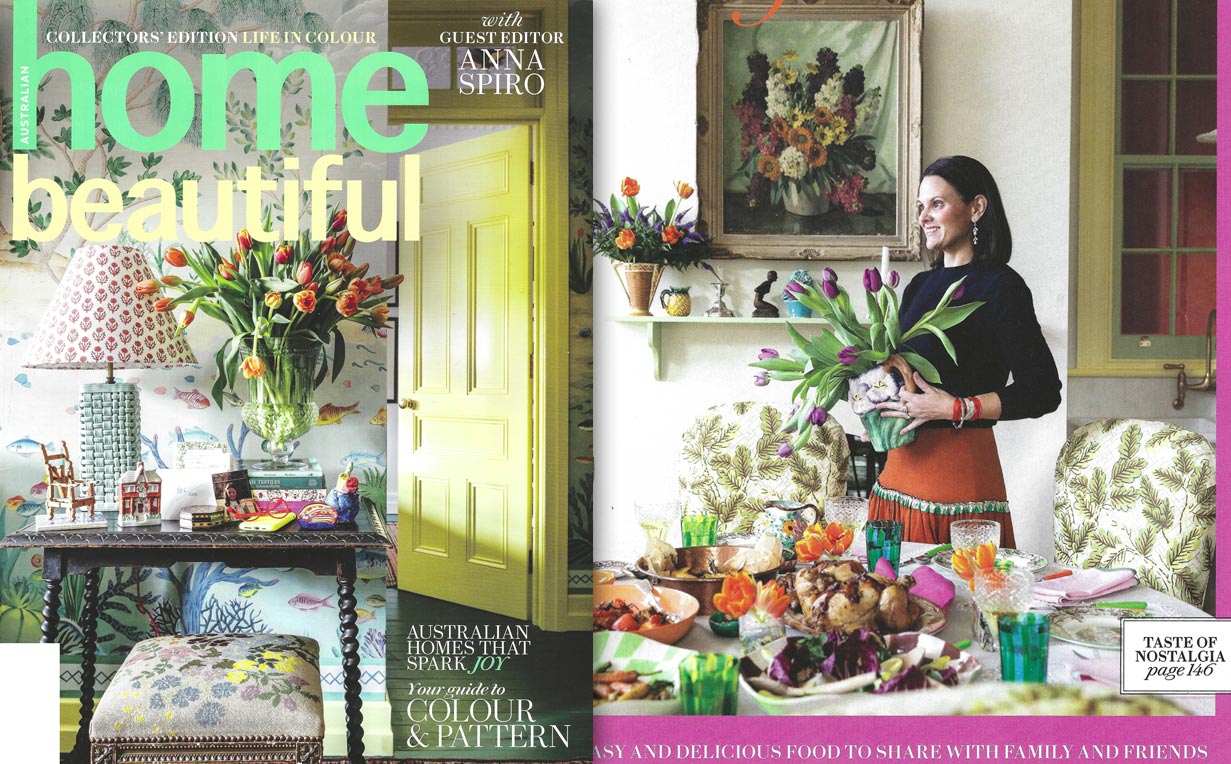
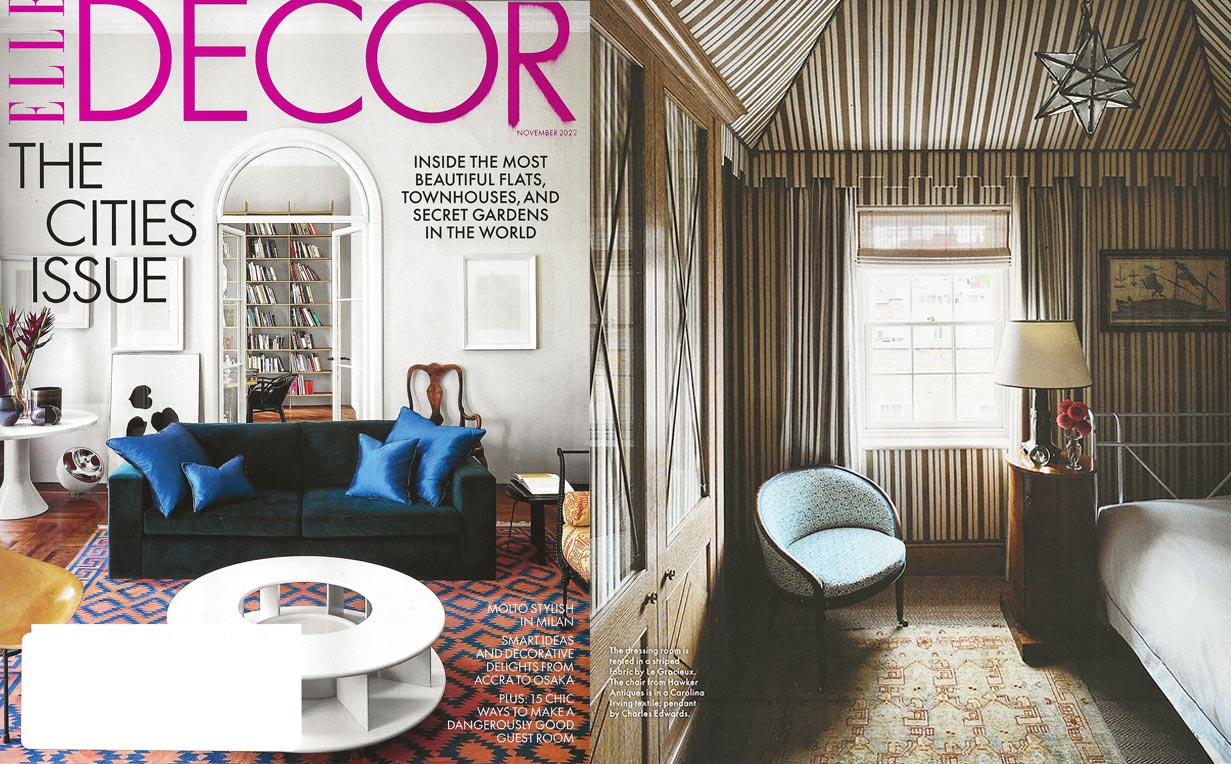
House Beautiful
March 2009
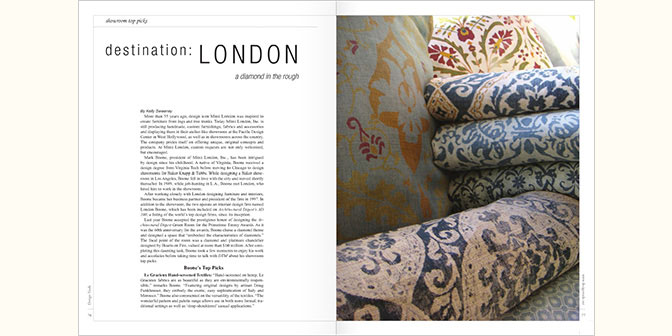
Mark Boone, president of Mimi London, Inc., names le gracieux as one of the showroom's top picks.
More Info...
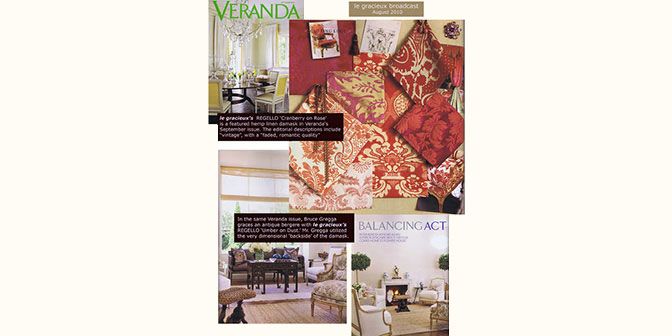
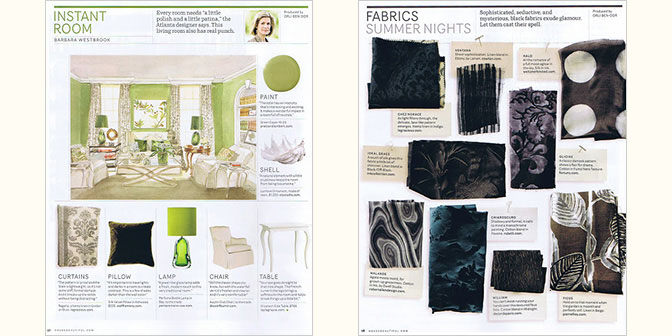
"Instant Room" designed by Barbara Westbrook features le gracieux's Regello in Umber on Dust this month!
As quoted: "The pattern is lyrical and the linen is lightweight, so it's not some stiff, formal damask." She states: "It breaks up the solids without being distracting."
"Fabrics: Black Fabrics for Summer Nights" by Orli Ben-Dor spotlights le gracieux's Chez Horace (Limited Edition) in Indigo. Orli says, "Sophisticated, seductive, and mysterious, these upholstery and curtain textiles exude glamour."
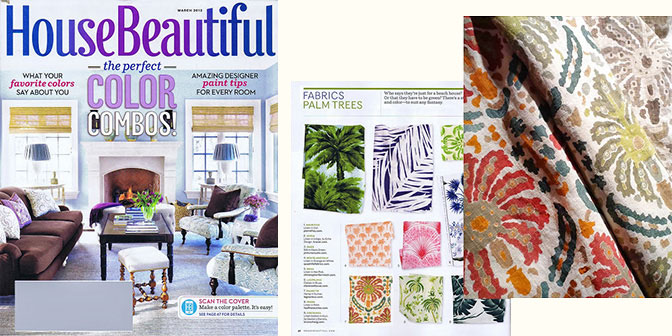
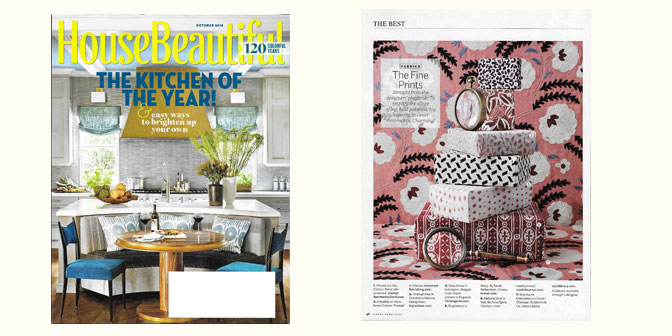
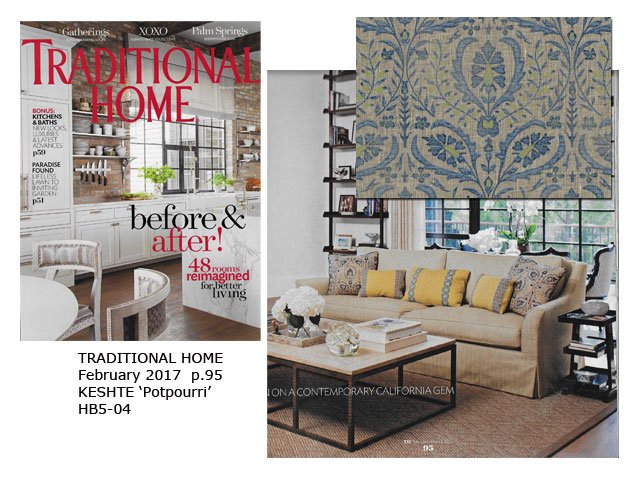
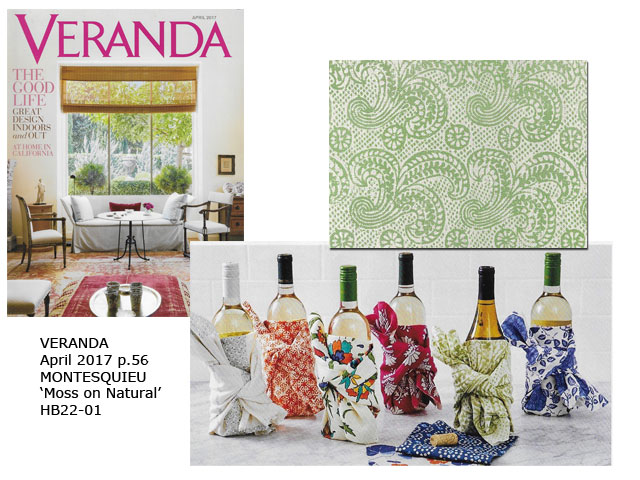
House Beautiful features le gracieux's Palmette in Sumac. We are very excited to be included in the "Fabrics" column of House Beautiful, March edition.
Shown here also in Tea Leaf and Portabello.
House Beautiful features le gracieux's Palmette in Sumac. We are very excited to be included in the "Fabrics" column of House Beautiful, March edition.
Shown here also in Tea Leaf and Portabello.
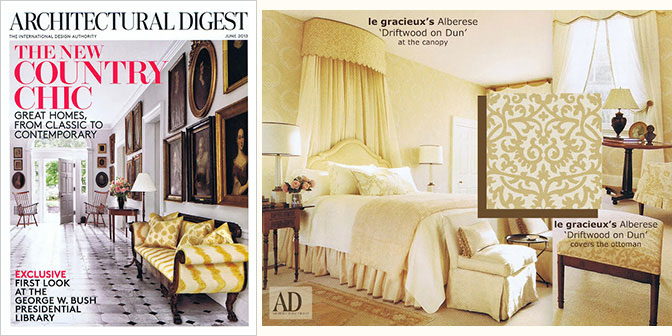
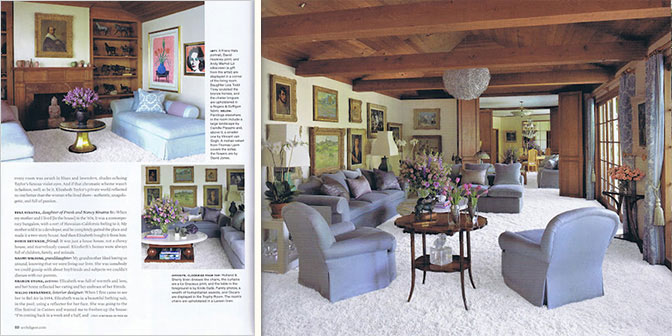
Architectural Digest publishes designer Amelia Handegan's exquisite work in its June edition. The article, "American Revival" is the story of a restored plantation house once owned by Thomas Jefferson's favorite grandson.
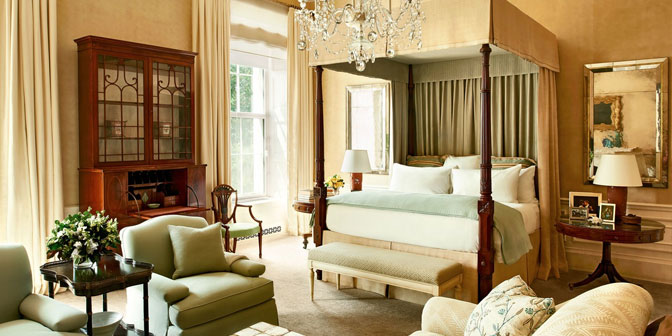
le gracieux is delighted that Alberese in Driftwood on Dun is center stage of the Master Bedroom in both the canopy and foot stool. Photograph courtesy of Architectural Digest.

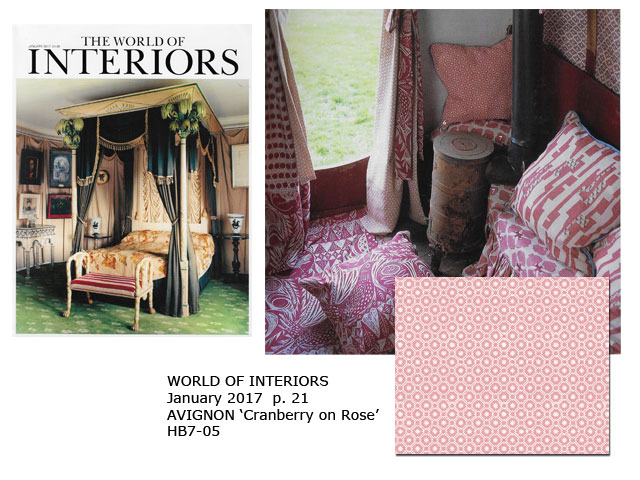
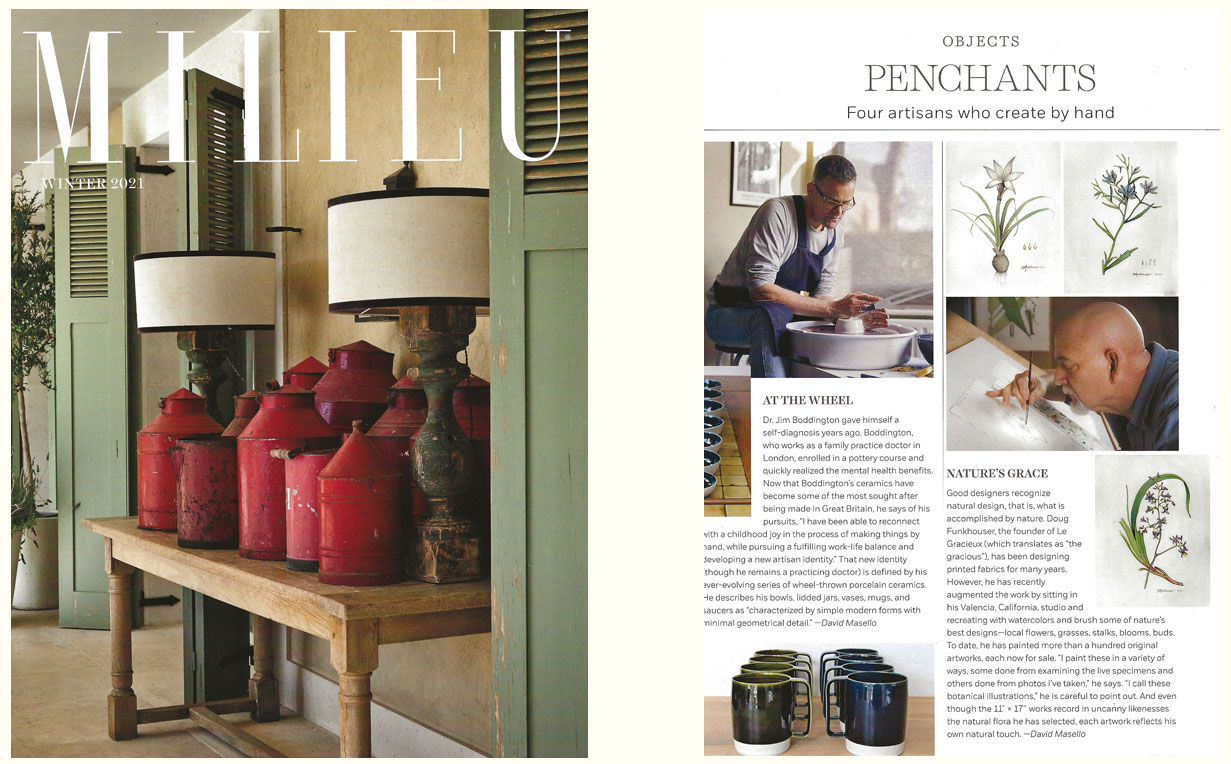
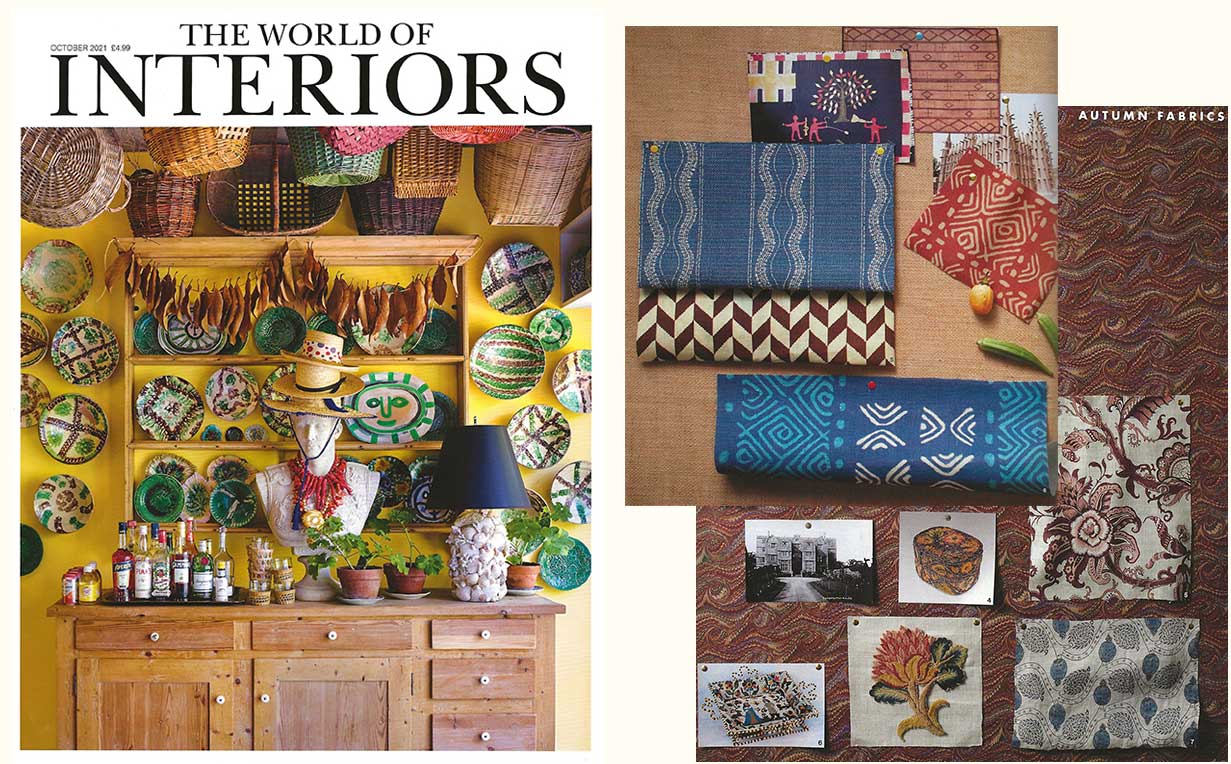
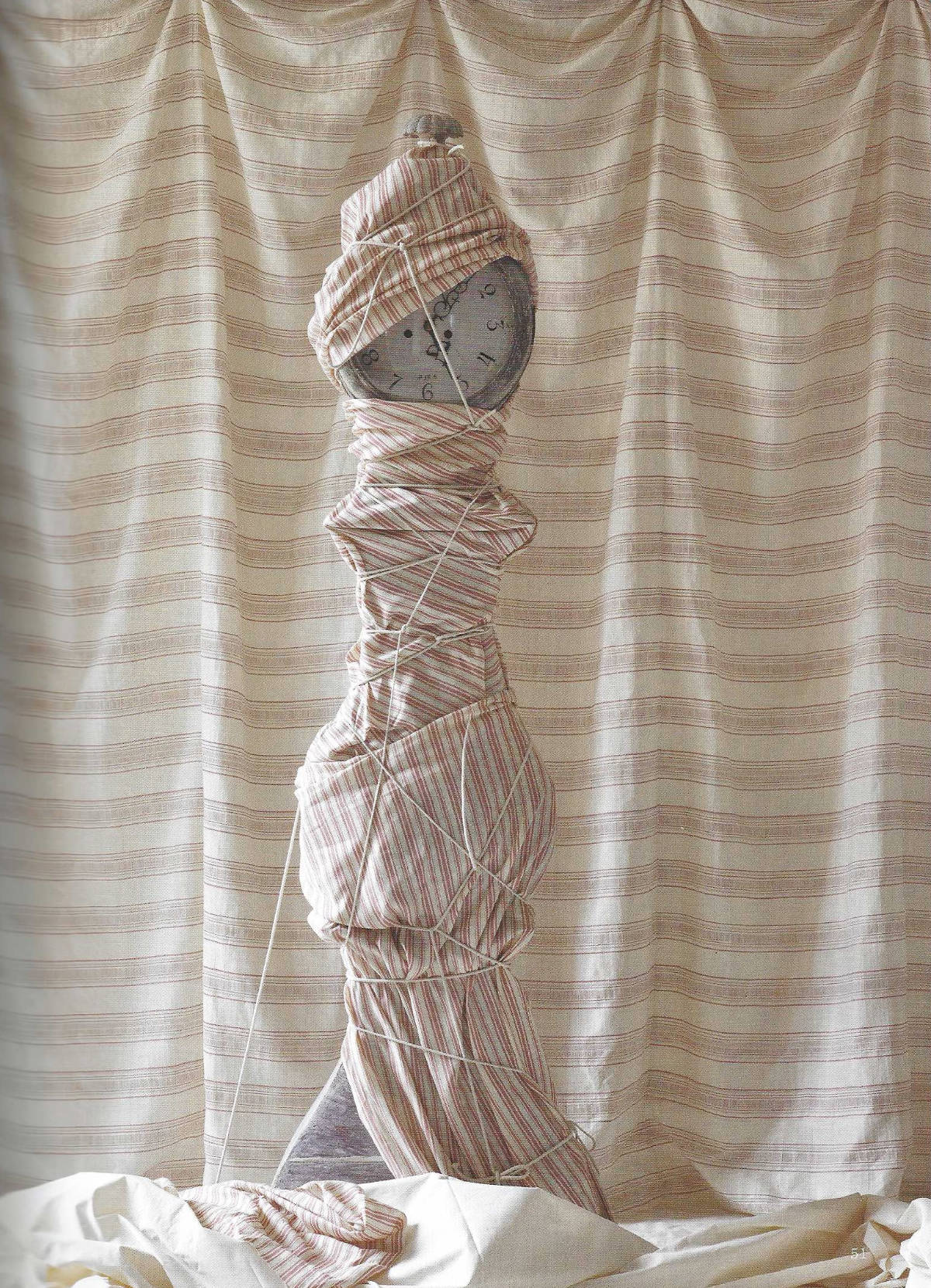
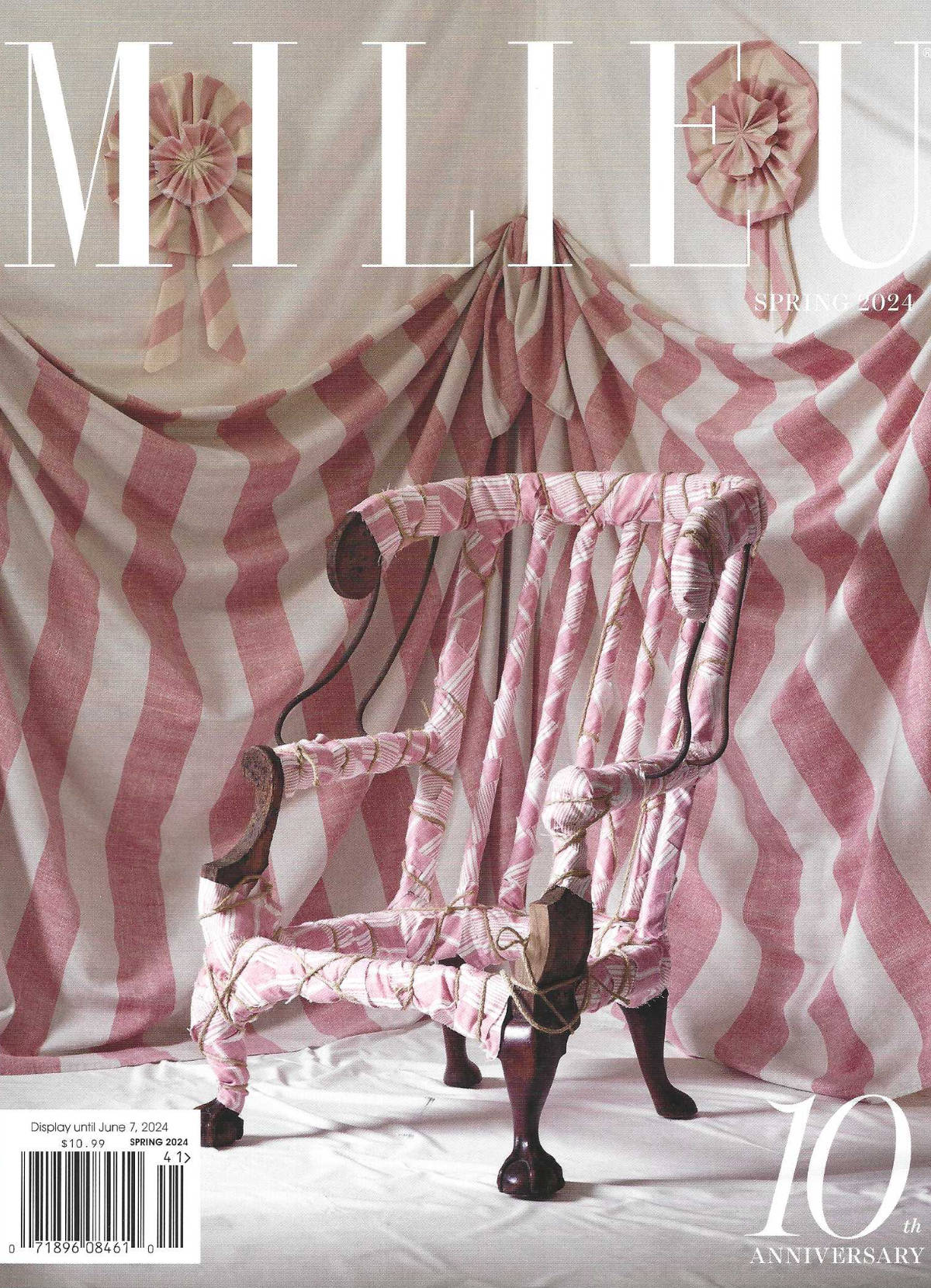
Milieu Magazine wraps an Antique Clock in le gracieux's Nightingale Stripe in color 'Cranberry' for its innovative article entitled 'It's a Wrap'!
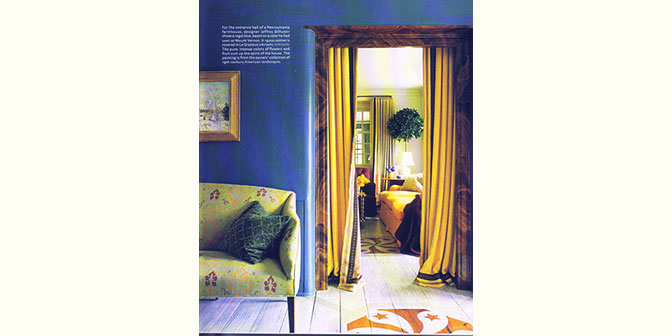
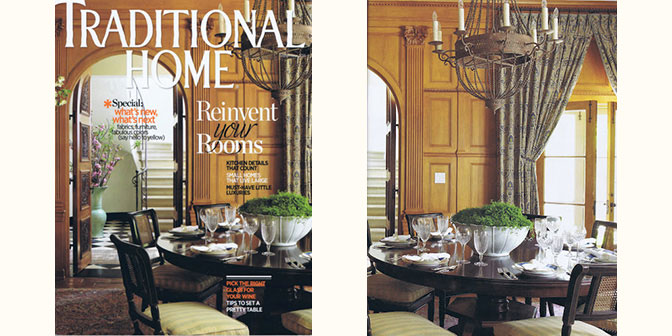
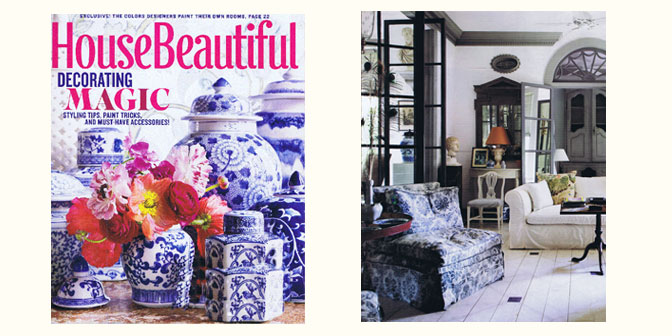
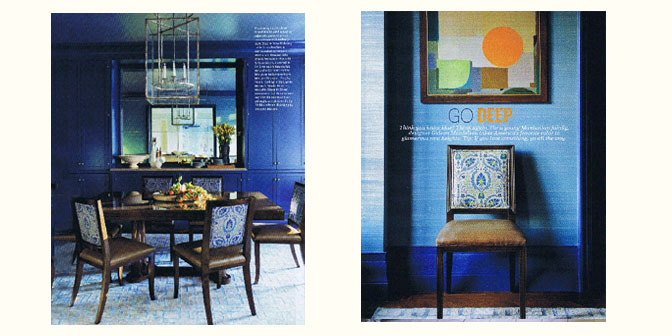
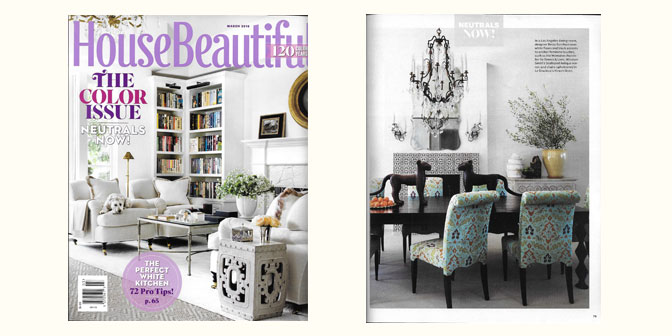
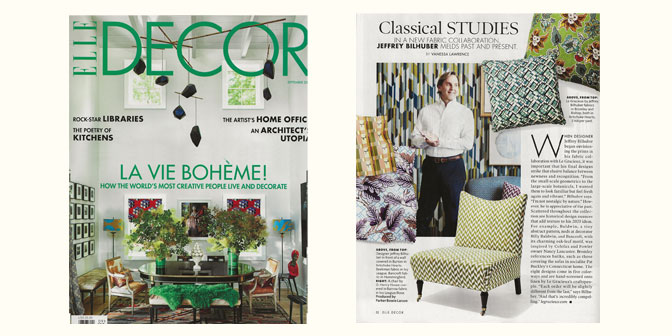
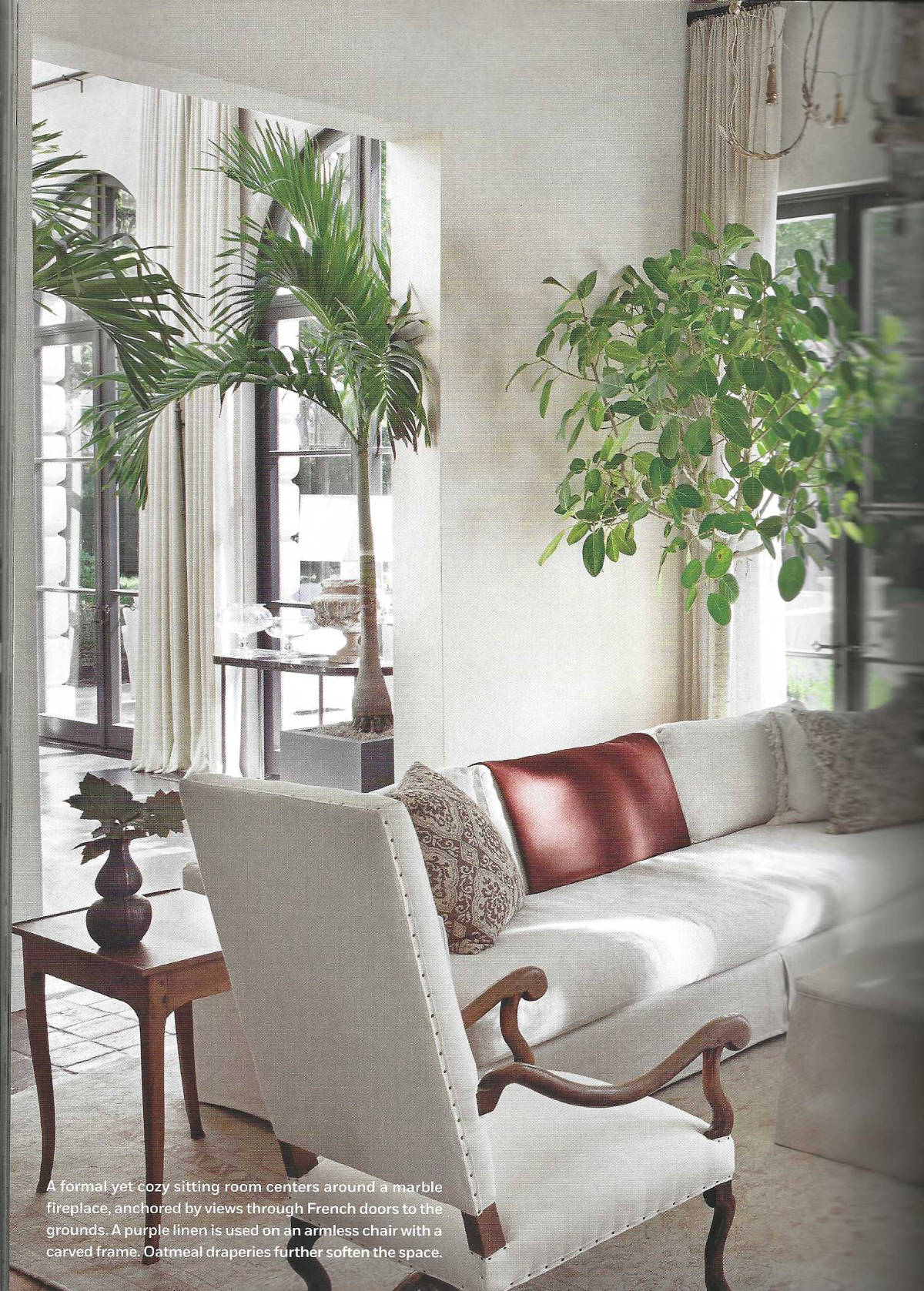
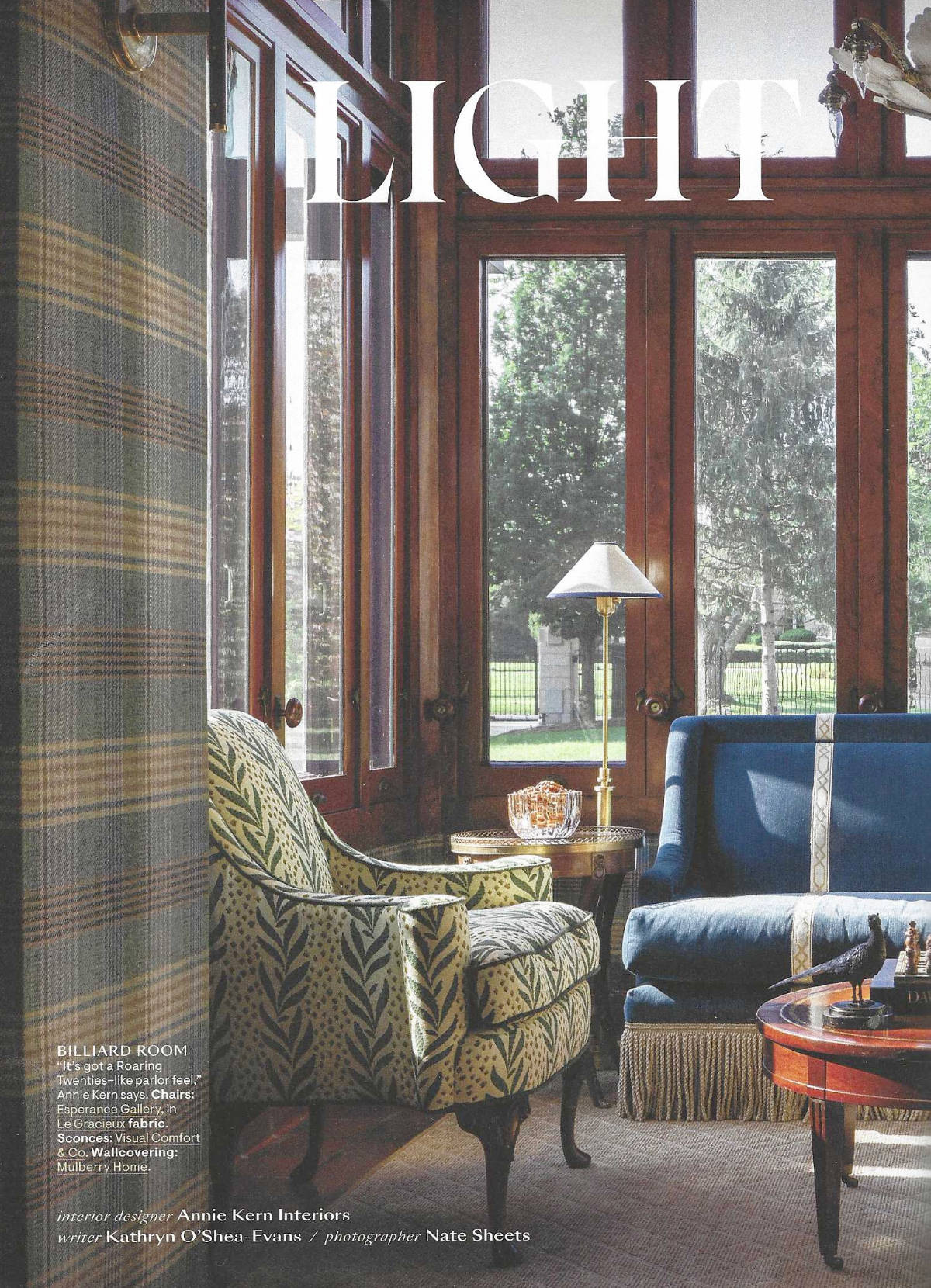
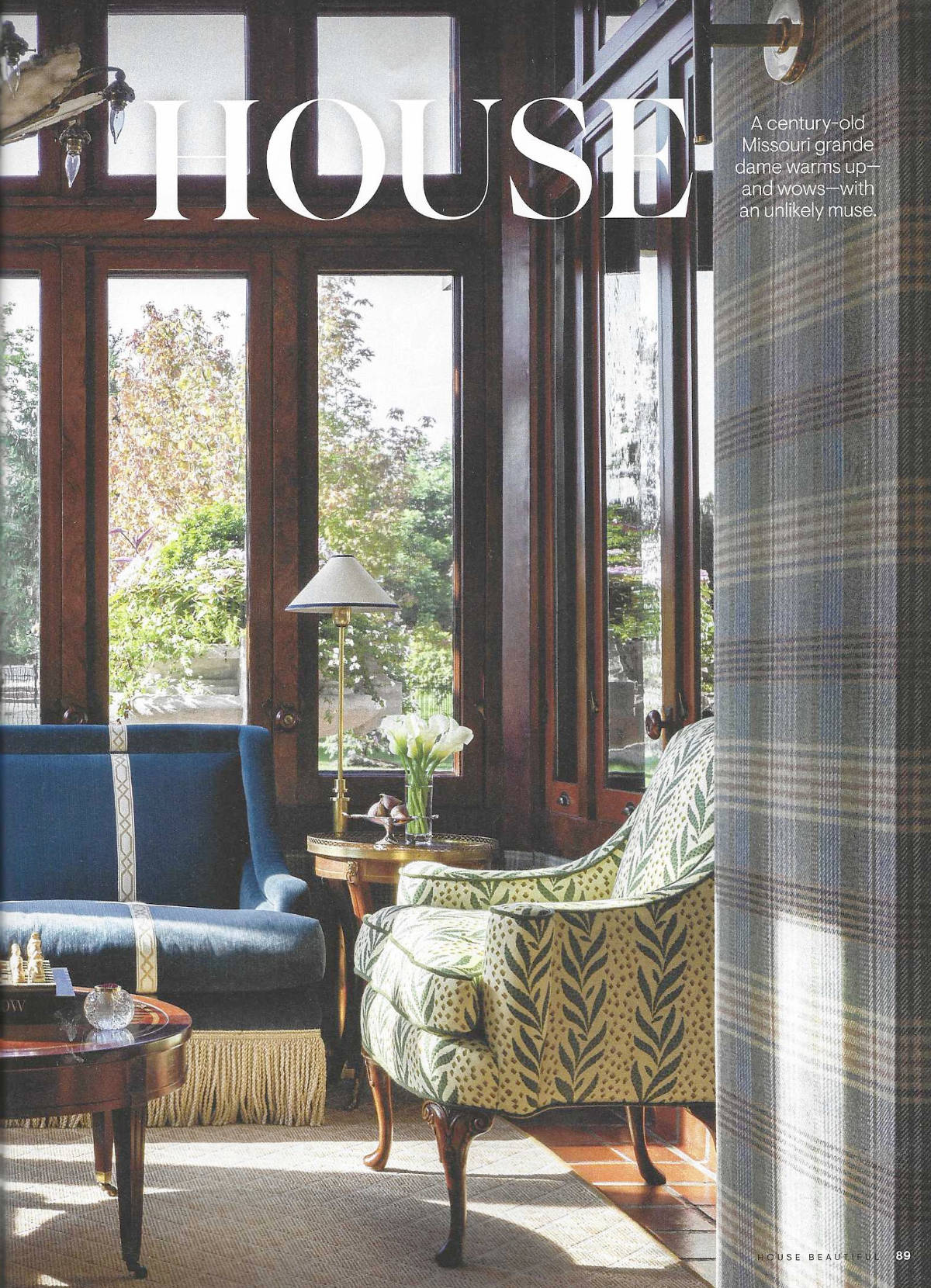
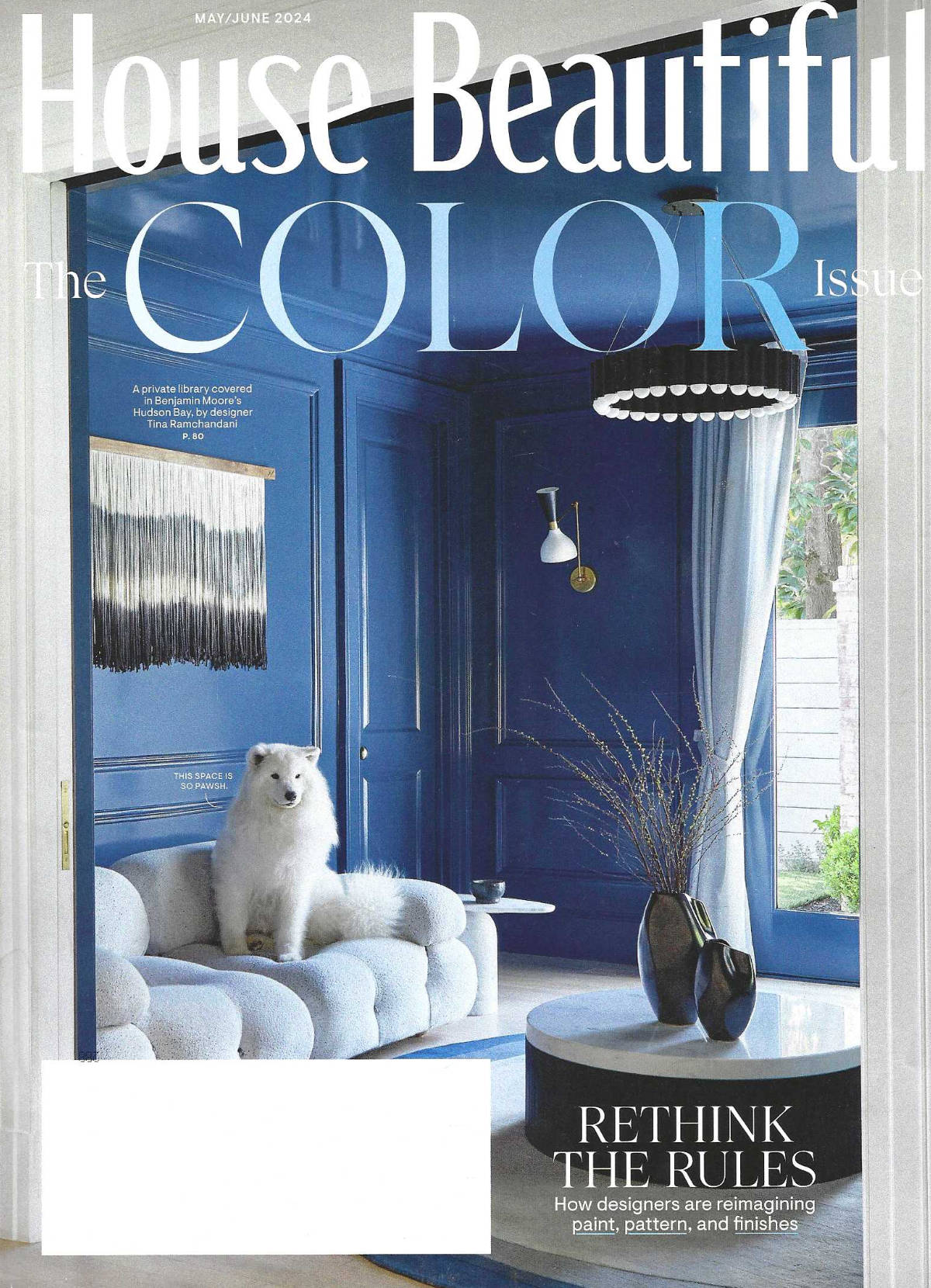
House Beautiful, The Color Issue, highlights Jeffrey Bilhuber for le gracieux's Bennett in color 'Artichoke Hearts' (chairs). Interior Designer Annie Kern Interiors.
Interior Designer: Kate Ridder
Triesta in 'Bella Rouge'.
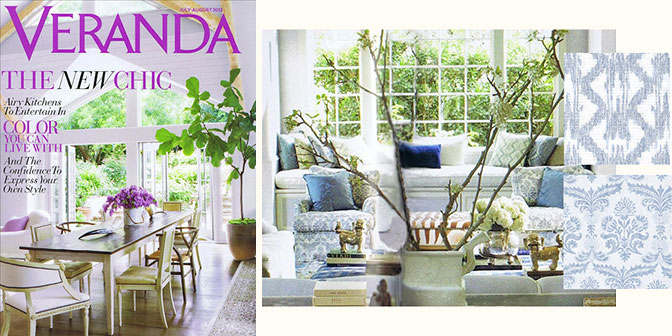
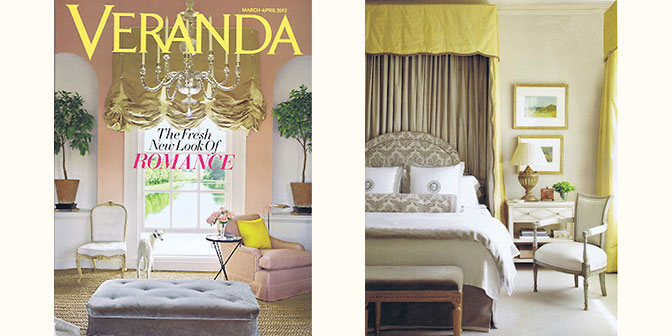
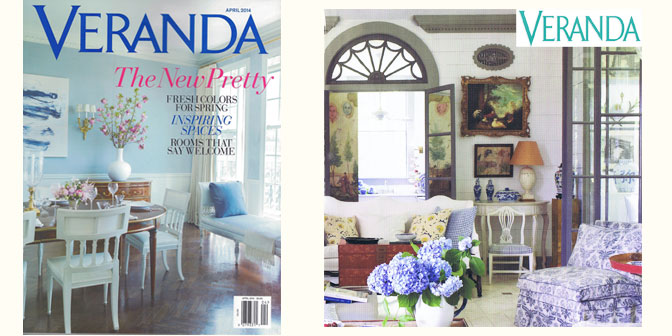
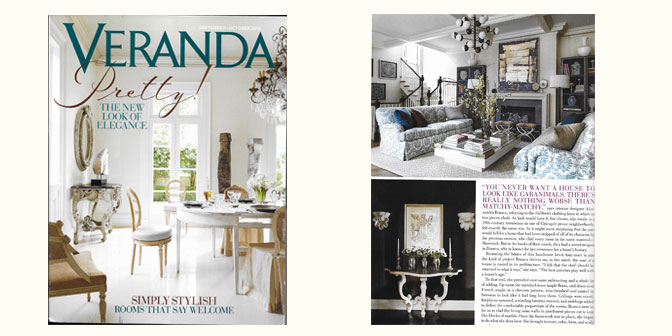
In Veranda, Issue Volume 38
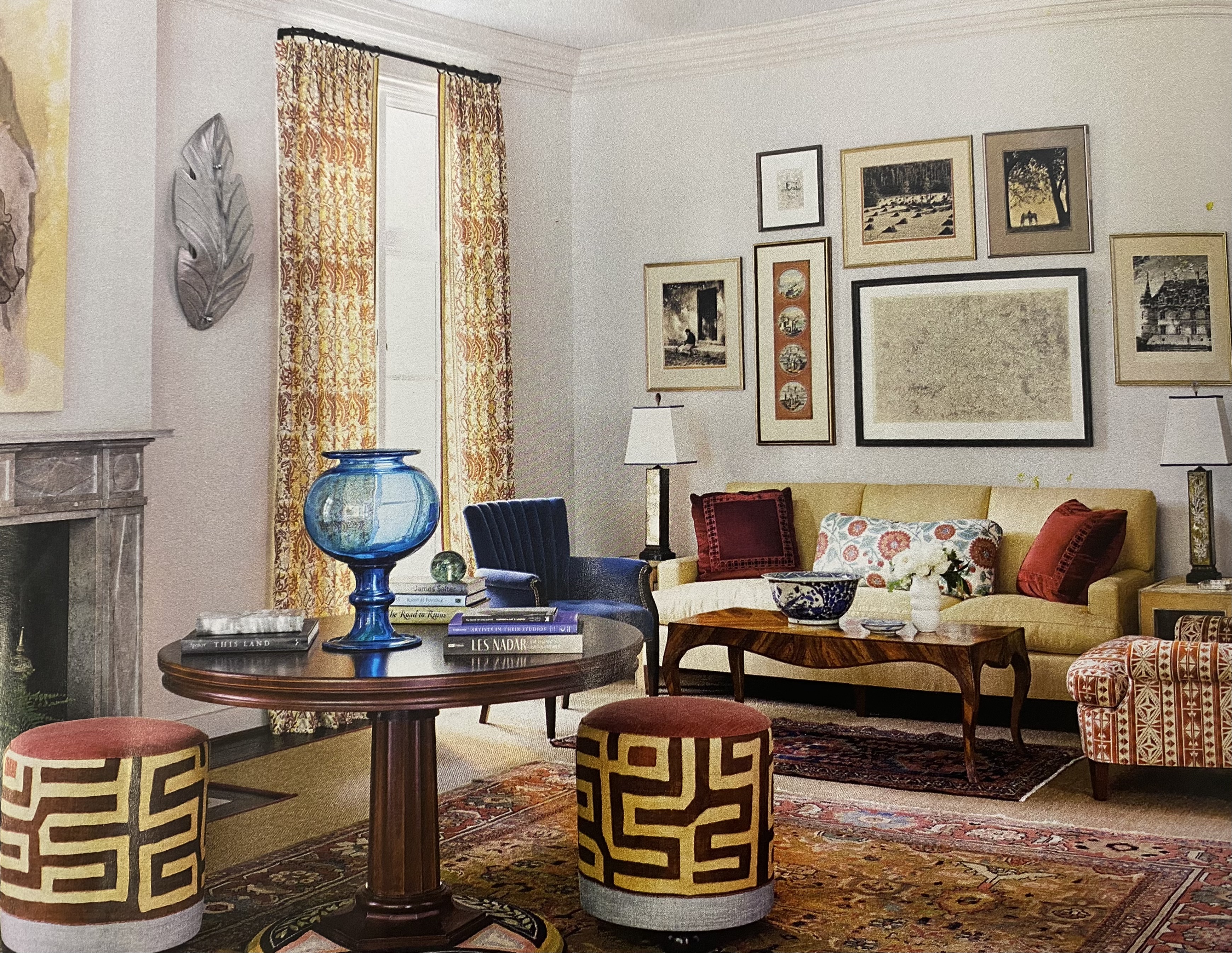
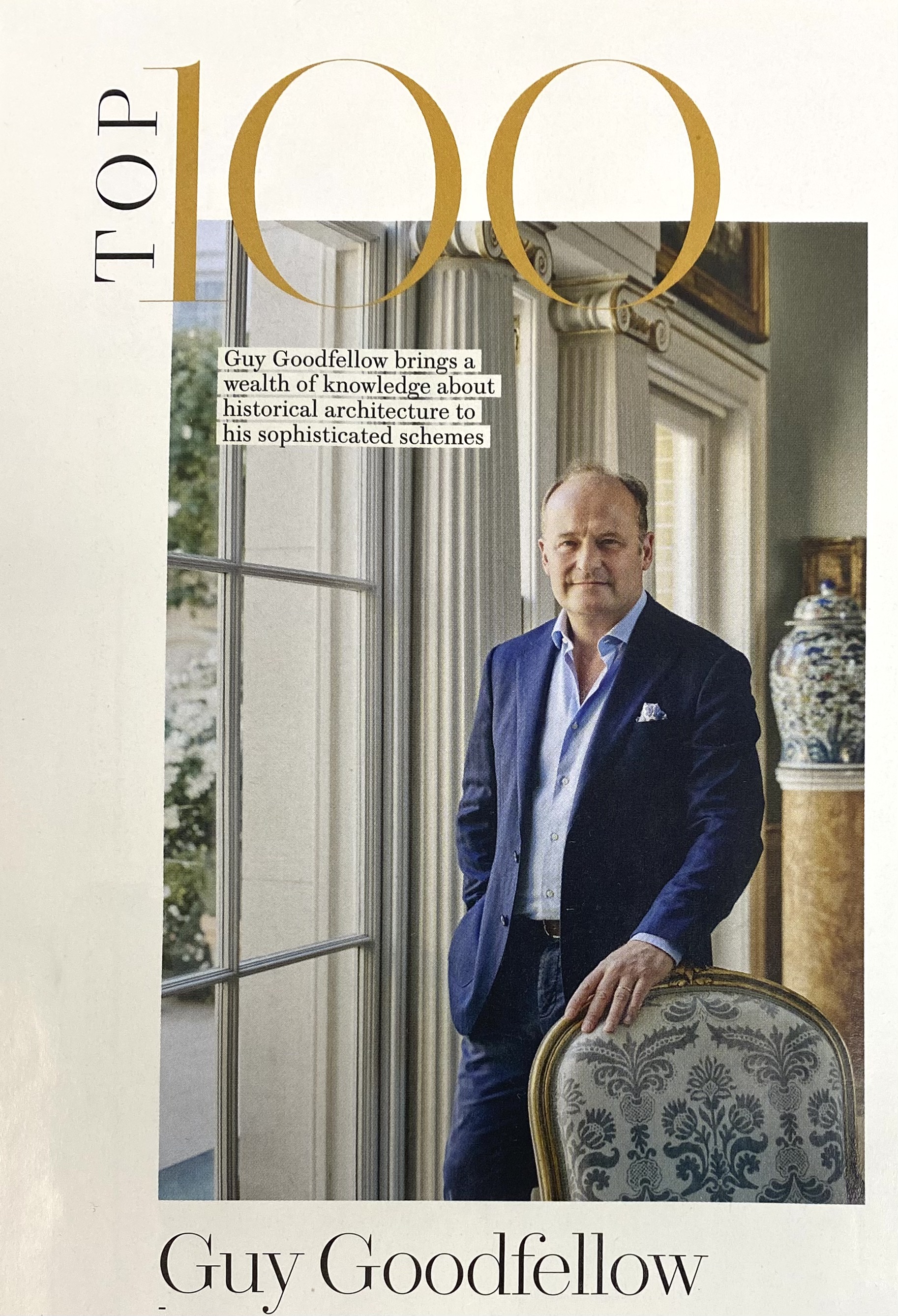
Interior Designer: Guy Goodfellow
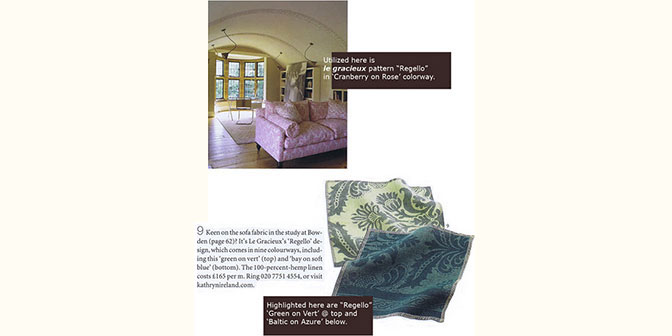
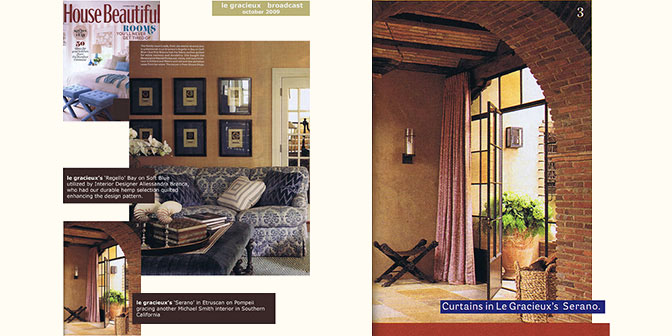
Regello in 'Bay on Soft Blue'
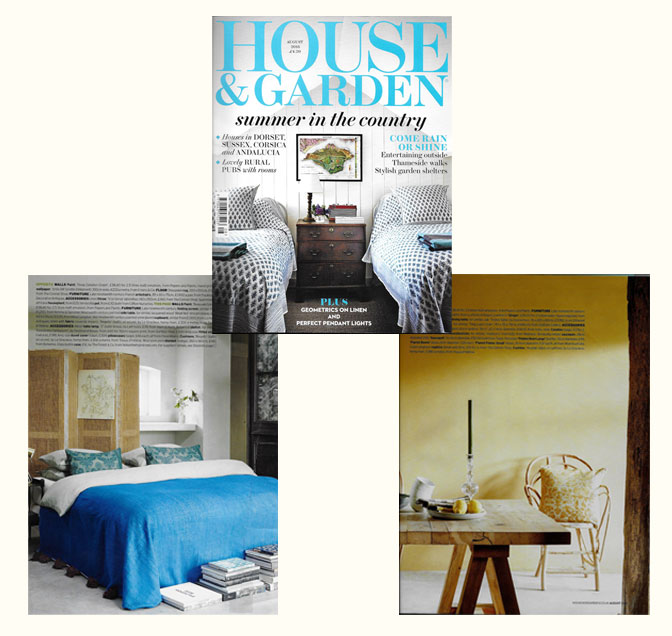
In 'The Best of the Best' House & Garden's Top 100 interior
designers and architects.
 Douglas Funkhouser grew up in New York City and, at an early age, studied under Japanese acrylist Noriko Yamamota. He later attended Lester Polokov’s Studio and Forum of State Design in Greenwich Village, where he developed skills in set design, paint and costume. After more than a decade of work in theater, Douglas decided to apply his craft to residential interiors. He produced hand-painted finishes, textiles and wall coverings for such notables as Bruce Gregga and Michael Smith, and collaborated with Rose Tarlow in the development of the Melrose Collection. The evolution of the line is a reflection of the master finishes and custom murals that grace his portfolio. Douglas has since developed Le Gracieux, his own line of hand-crafted hemp textiles. He borrowed the term from an essay by French author Montesquieu, in which he discusses the many degrees of pleasure contained within the arts. Le Gracieux (the gracious) was listed among them, meaning “that which is refined and beautiful.” Douglas says, “It’s important for my textiles to possess an ageless sense of beauty and a hand softened by time.” See some of Douglas’ textiles in today’s Maker Monday.
 Regello, le gracieux’s signature damask, is rendered as a resist-dyed linen in softly faded tones, offering a gentle hand and an air of antiquity in this installation by Michael S. Smith. Photo: Lisa Romerein
Andrew Joseph: How do you stay creative and inspired?
Douglas Funkhouser: I begin each day focused on positive thoughts and I do my best to adopt an attitude of gratitude for all the blessings that have come my way in life.
I am also an ardent fan of sketching. I have always said that “a sketch a day keeps the doctor away.” The discipline of sketching from life serves as a form of meditation to me.
AJ: Can you tell us about a specific moment in your career that made you feel accomplished?
DF: Once upon a time, in 1997, I called upon a designer named Rose Tarlow. She was just beginning her fabric line. After reviewing my portfolio she offered me a full time position as her “in house” textile designer. As a designer new to the world of textiles I could not have asked for anything more…
AJ: What is your favorite aspect of your job?
DF: I get to work with many well-known and talented interior designers on a regular basis. It brings me joy to see how each one is unique in their approach and how they use my textiles in different ways and in different contexts.
 Kirachi – A kaleidoscope of color, this damask weaves together the soulful elegance of Turkish and Moorish motifs into a harmonious tapestry of design. Interior designer Jeffery Bilhuber. Photo Credit: Kelly Taub
AJ: How do you approach designing for a client with a specific style in mind?
DF: I approach it in the same manner that an actor develops a character for a role in a movie or a play. I immerse myself in the study of that particular style and develop it until it becomes part of me and I am able to produce it in my own hand.
AJ: What is your favorite design tool to use?
DF: I enjoy Photoshop… I began my design career on the cusp of computer technology. I am well versed in the old way as well as the new way of doing things. Nothing is better than the discipline of drawing and designing textiles by pen and ink in my own hand but nothing saves more time than being able to scan those designs into Photoshop and quickly build them into repeat and color separation.
AJ: Can you describe a project that you’re particularly proud of?
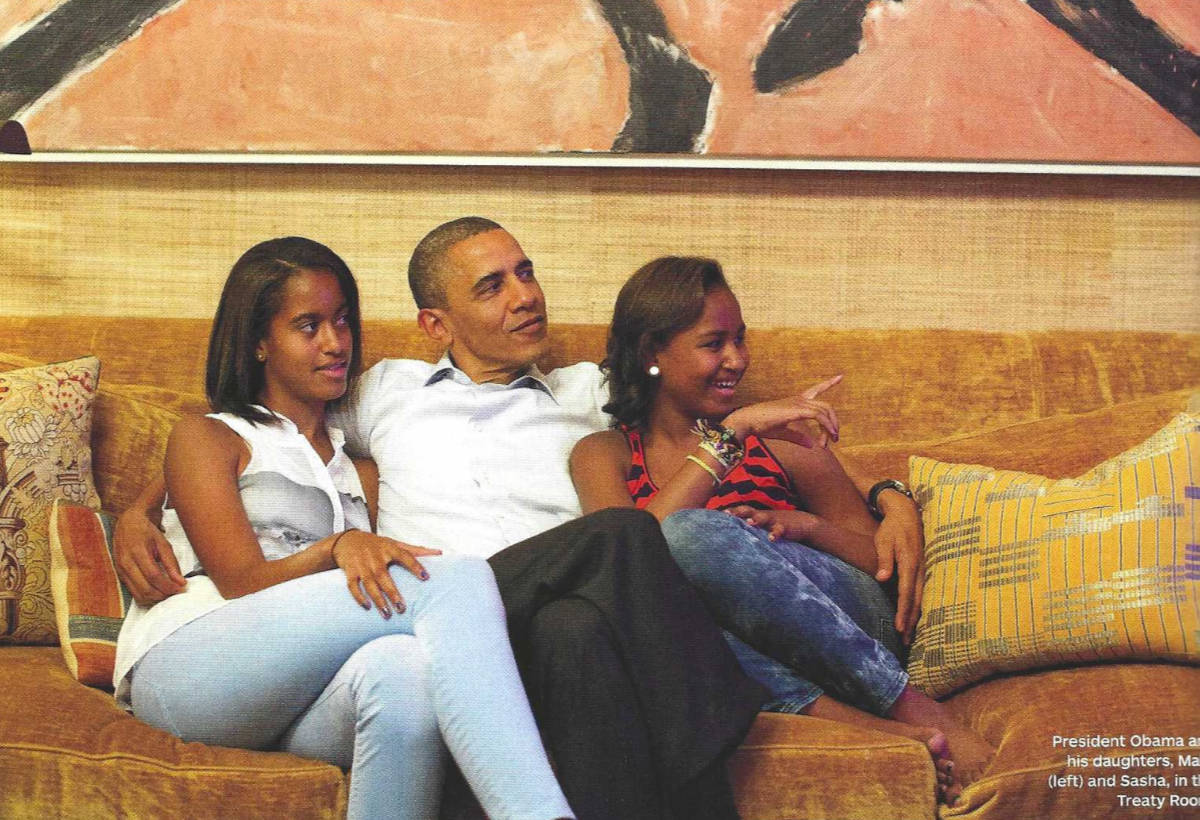
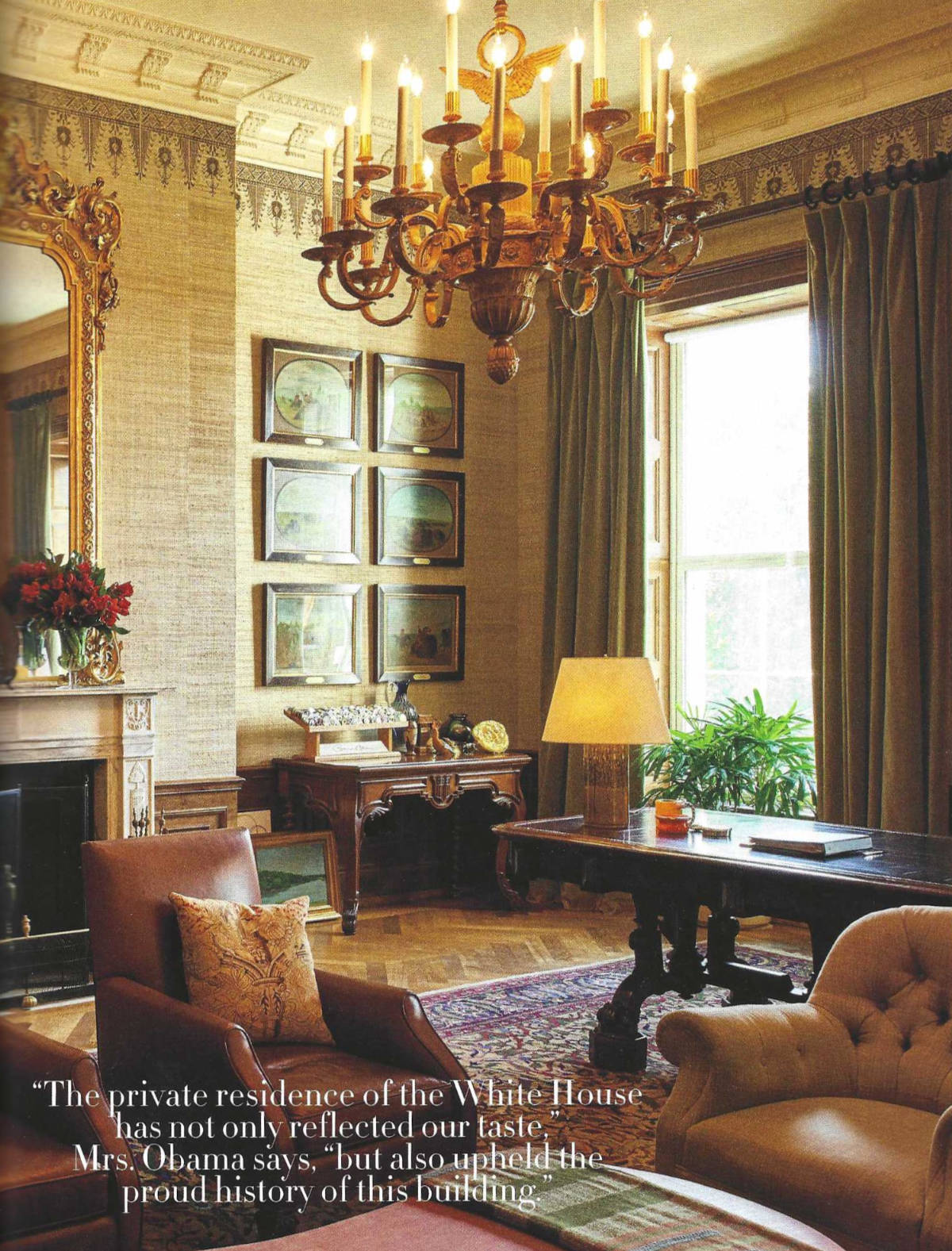
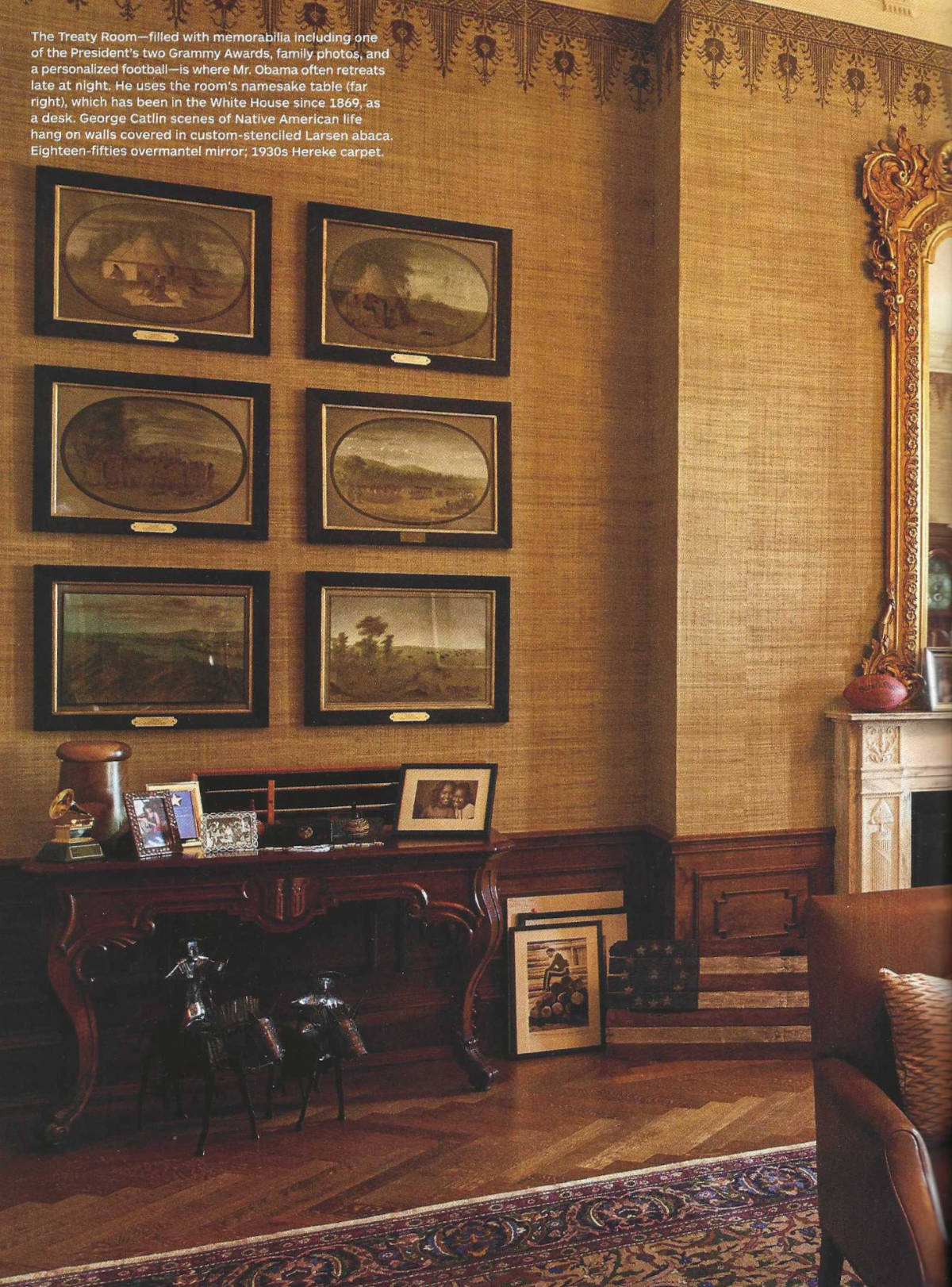
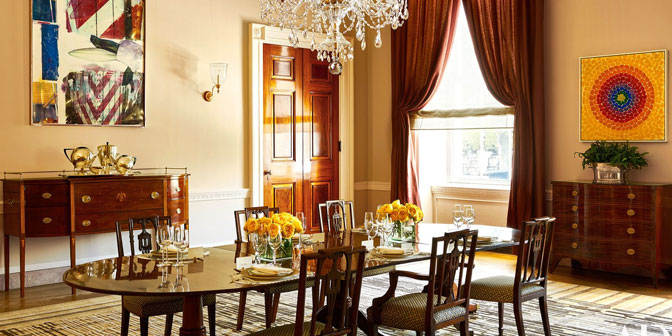
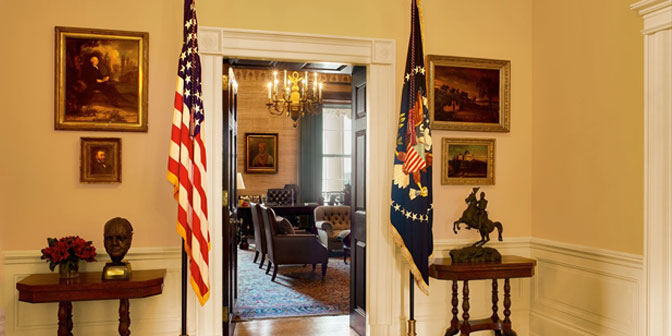
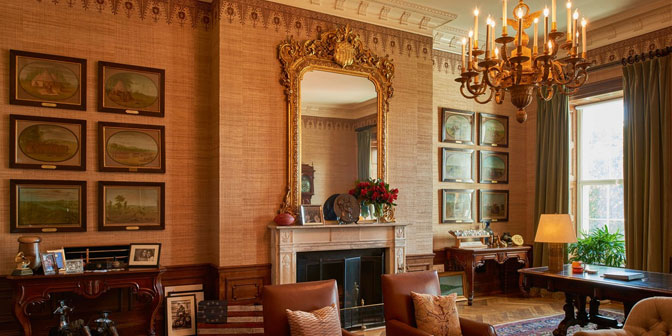
DF: I designed and fabricated a border freeze for the Treaty Room at the White House. This work was done at the direction of interior design extraordinaire Michael Smith. The inspiration we used came from a woven scarf of Turkish origin. The motif was stenciled to look as though it had been woven into the grasscloth wall covering.
It is an honor to see my work at the White House. I have always held a deep respect for the office of the President of the United States of America.
 Triesta is a gentle symphony of color printed on soft linen, inspired by the timeless elegance of a 16th-century European tunic, seen here gracing the curtains with its understated charm in a room composed by Suzanne Rheinstein. Photo Pieter Estersohn.
AJ: What would your dream project or dream client be right now?
DF: I already have some amazing dream clients. One is Oprah, I’ve worked with her for many years. Another is Jaclyn Smith; she truly is an angel, and there are many more. My dream project is to have an art exhibition at one of the major galleries… please stay tuned!
AJ: Style (or design) icon and why?
DF: Interior designer Mr. Bruce Gregga. I’ve known him and I’ve worked with him for well over thirty years. He has mentored me and is the one who has taught me everything I know about the subtle use of “non” color and the mastery of decorative finishing for interior design.
AJ: What’s a new hobby/skill that you have learned recently?
DF: I currently study bluegrass and jazz on the guitar and the five-string banjo.
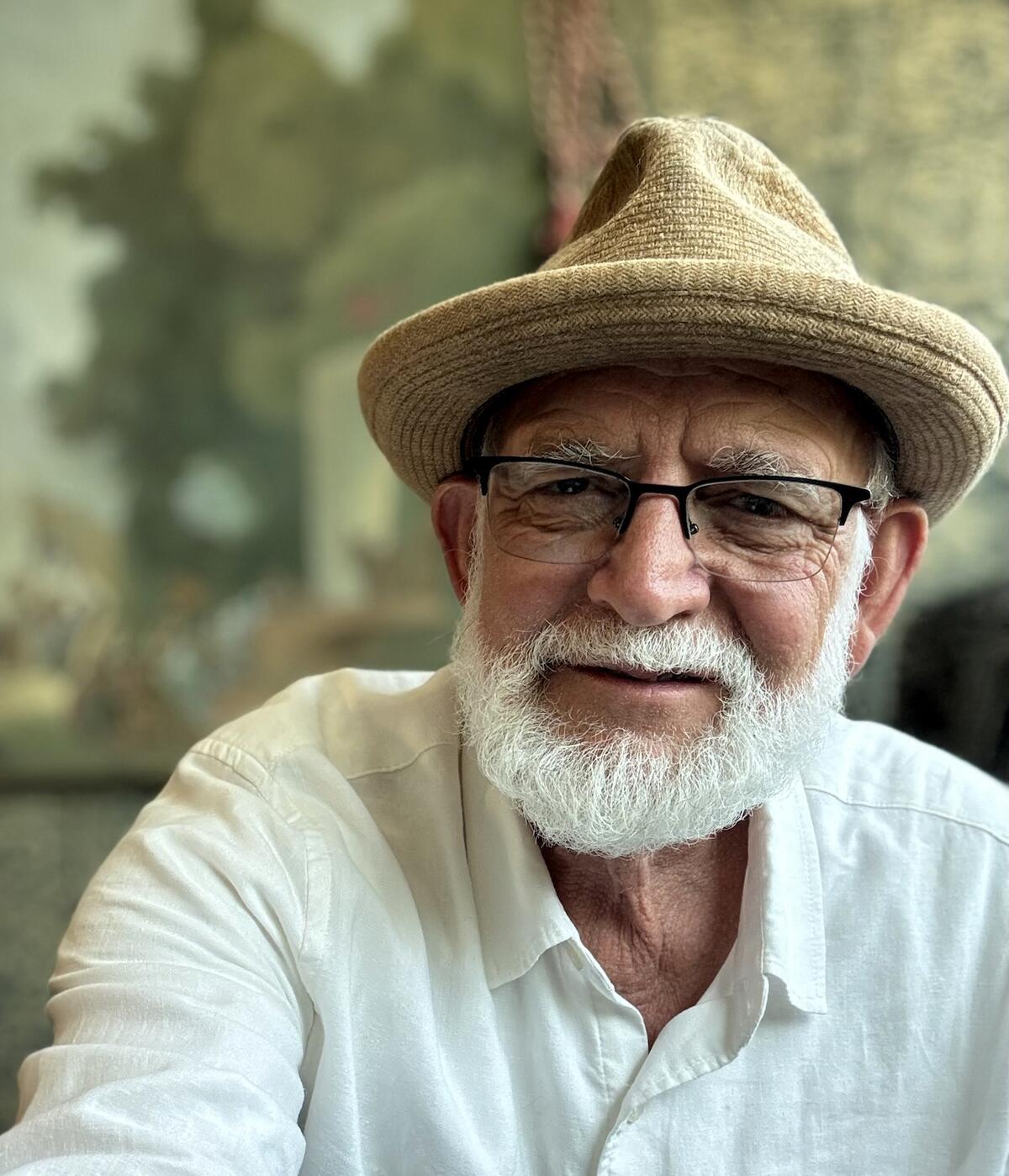 Douglas Funkhouser wants to make the world a more beautiful place. The Valencia, California–based artist and founder of Le Gracieux is on a mission to create handmade textiles that both elevate and inspire spaces. “I strive to be optimistic in my work,” he tells Business of Home. “I want my pieces to have a positive effect and impact on those that come in contact with them.”
Growing up in New York, his father was an art director and his mother was a fashion illustrator. Both encouraged him to start painting as a child. In college, he studied under costume and set designer Lester Polakov at the Studio and Forum of Stage Design, a small private school devoted to theatrical art. “It was through his mentorship that I began to work as a Broadway scenic artist,” says Funkhouser.
 In the 1980s, he opened his own studio, where he spent the next decade designing and painting scenic backdrops for commercial photographers and theater, television and movie productions. He worked with the likes of Hubert de Givenchy, Nike, Harley-Davidson, McDonald’s, Disney and Coca-Cola. “When the ’90s came around, I decided to take what I had learned from painting and apply it to the world of residential interior design,” he explains. “I reinvented myself and began to produce exclusive decorative finishes, murals and textiles for high-end residential interiors.”
Funkhouser’s client list quickly grew to feature an array of noteworthy designers, including Michael S. Smith and Waldo Fernandez, and his works appeared in the homes of celebrities such as Oprah Winfrey, Steven Spielberg and Elizabeth Taylor. He was introduced to Rose Tarlow in 1997, and the two collaborated together on what would ultimately become her first line of textiles, the Melrose House collection.
Motivated, he launched Le Gracieux in the spring of 2002 with nine hand-printed linen upholstery patterns. “I began to experiment with the resist dye method [an ancient batik-like process where specific areas of fabric are treated to prevent dye penetration] and set up a 10-yard printing table in my backyard under an old oak tree,” he says.
Orders came flooding in—including a hand-stenciled design for a wallcovering that Smith created for former President Barack Obama’s White House—and the rest is history. Today, Le Gracieux’s SoCal manufacturing facility is home to a trio of 25-yard-long print tables, where Funkhouser and his team hand-produce each and every piece using the centuries-old printing and dyeing techniques. “Though they’re made with traditional European craft methods, they are genuinely an American-made product,” he says.
 Funkhouser continues to work with acclaimed designers on bespoke textile designs and has released collaborative collections for Le Gracieux with Orlando Diaz-Azcuy and Jeffrey Bilhuber. “Every designer is unique in their own creative process,” he says, “and it’s a pleasure to work with so many so closely.”
More recently, the brand released Le Jardin, a collection of five French flax linen patterns based on traditional motifs from around the world. “They are beautifully resist-dyed linens offered in a palette of vibrant colors designed to relate to and coordinate with some of the collaborations we’ve launched with other designers,” he says.
Currently hard at work on the brand’s first line of performance fabrics, he is also collaborating with Tarlow on an upcoming collection of exclusive, Le Gracieux–produced textiles. Additionally, Funkhouser is revisiting his early love of painting and putting together a gallery show. “My career as an artist has spanned six decades,” he says. “I have cultivated an attitude of peace and thankfulness.”